
Trace Green Lake County Former Owners
How far back you can go depends on the era of the parcel. Green Lake County's online real-estate index and images reach the 1980s. Older transfers need a direct request. The Register of Deeds can point you to deed books, tract indexes, microfilm, surveys, plats, or archive catalogs. These cover earlier years. Not every old source lists its years online. Ask the custodian which books cover your municipality and legal description. Then search Green Lake County property records by address first to anchor the parcel.
| Source | Years It Covers | Where Held | What It Shows |
|---|---|---|---|
| Tapestry and Laredo index/images | June 1982 stated start | Register of Deeds online services | Recorded real-estate instruments. |
| WRDA profile index | December 1985 stated index reach | Wisconsin Register of Deeds Association | Separate coverage statement to compare. |
| Federal tax liens/releases | April 2003 online start | Register of Deeds | Local recording references. |
| Deed books, tract indexes, microfilm | Exact year runs not located | Register of Deeds / archives | Older chain before online coverage. |
| Surveys and plats | Original surveys reach 1830s; survey files late 1840s+ | County Surveyor and Register | Land location and division clues. |
Use the online party and tract index within its stated coverage. Before picking a book or film series for earlier deeds, contact the Register. Surveys and plats can pin down the land itself. They help most with older deeds. An old deed may describe a quarter-section or a lot rather than a street address.
Walk the Green Lake County Deed Chain
Start with the current owner or parcel. Find the latest deed first. Then work from grantee to grantor, one transfer at a time. A grantor gives up an interest; a grantee receives it. Every transfer must match the same legal description, not just a familiar name or street. If the online trail ends, write down the last recording reference and ask the Register about the next older book, tract index, or film.
- Find the latest deed and identify the owner as grantee.
- Read the grantor and confirm the same parcel's complete legal description.
- Search the grantor as a prior grantee, then repeat for the next transfer.
- At the online cutoff, move to the Register's older indexes, books, or microfilm.
- Grantor and grantee
- The transferring party and the receiving party in an instrument.
- Chain of title
- The linked sequence of recorded transfers affecting a parcel.
- Legal description
- The land identity in the deed, plat, CSM, or survey.
Green Lake County's Online Cutoff
The Register's online services page sets a firm edge. Real-estate index and image coverage begins in June 1982. The Wisconsin Register of Deeds Association profile tells it differently. There, documents are indexed back to December 1985. Keep both in your notes. One marks the portal's stated start. The other marks the profile's current reach. Federal tax liens and releases start later still, in April 2003.
Within that online range, the county's ColorTrac tract and party index can locate transfers fast. Indexing happens by the next working day. Images post by noon the next working day. Verification wraps up within two business days, barring high volume or equipment trouble. A few older images run faint. Legibility was not required before 1997.
A freshly recorded transfer can lag between index and image. That gap can trip up a backward search. A party may show in the index while the image is still missing. Note the recording reference. Then call the Register before assuming the link is lost. An online gap alone never proves an earlier owner or transfer is absent.
Open the Green Lake County ColorTrac index for the online grantor-grantee and tract search.
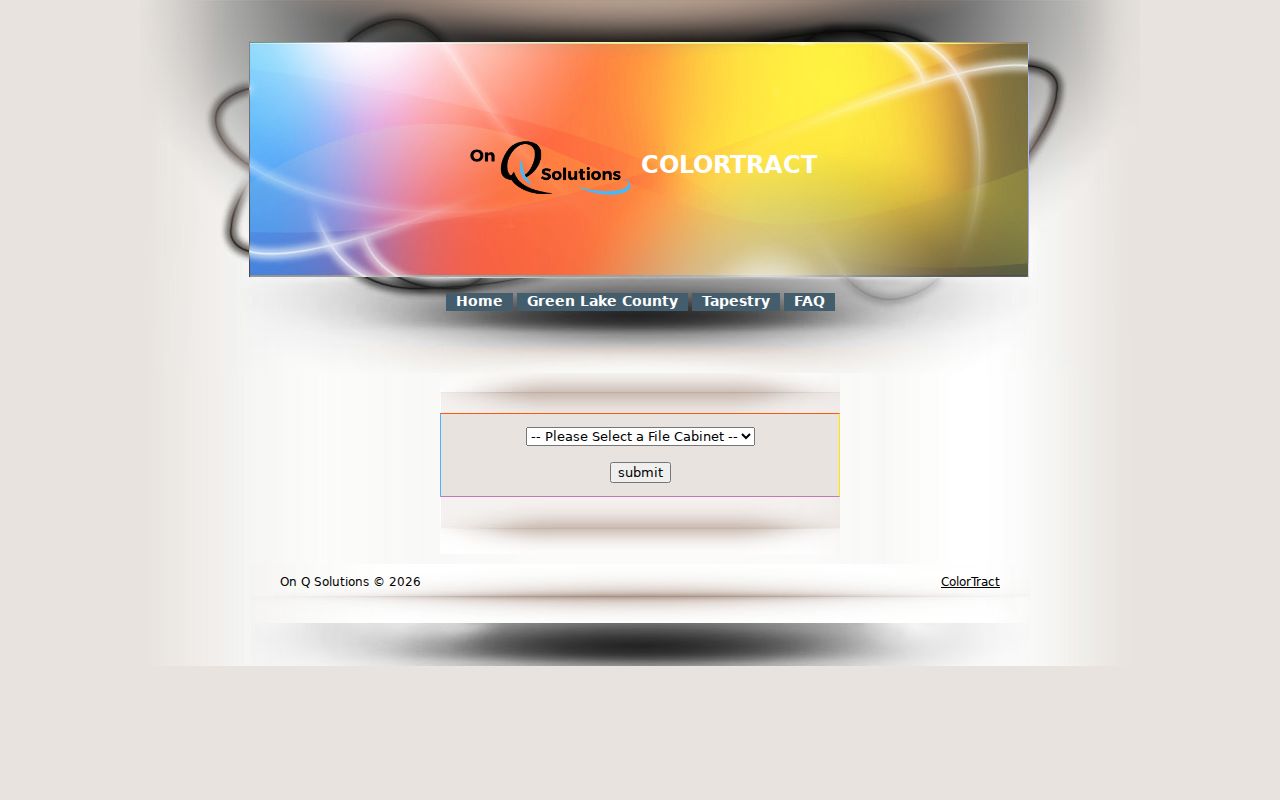
Note the last result before the online edge. That older search then begins with the right party and the right parcel in hand.
Older Green Lake County Deed Books
Before online coverage, ask the Register about original deed books, grantor-grantee indexes, tract books, microfilm, and courthouse terminals. Exact book-year runs are not published. Don't guess a volume from a deed date. Give the office the party names, the township or municipality, and the full legal description. That keeps the request narrow.
FamilySearch and the Wisconsin Historical Society or State Archives catalog are worth a follow-up search. Search by county and record type. Holdings vary by county. A local public-records request can also ask the custodian to name existing indexes or finding aids. It cannot require a new ownership timeline.
For a staff search, hand over both past and current party names, the complete legal description, the municipality, and an approximate date range. The recording fee is $30. Copies run $2 for the first page and $1 for each later page. A certified copy adds $1. Older images can be hard to read, since no legibility standard applied before 1997. Ask for another format or a staff comparison when a boundary call is unclear.
Surveys Place Older Green Lake Land
Older land answers sit with the County Surveyor. That office holds original government survey material from the 1830s, county surveyor documents from the late 1840s, and current surveys. The Register's historical property collection adds deeds, mortgages, plats, section maps, surveys, and land patents. They matter when a deed predates a street address.
Describe the land the way its era did. Unplatted land needs quarter-section, section, township, and range. Platted land uses a plat name plus lot and block, while a survey map takes a CSM number with a volume and page. The tax-bill description is abbreviated. It cannot stand in for a deed's complete description. Recorded plat copies cost $50 in the subdivision, cemetery, and condominium categories, and transportation plats cost $25.
Probate Can Break a Simple Chain
A death can reshape a chain of title without anything resembling a sale. The paper trail may pass through a Register in Probate file or a fiduciary deed. It may also involve a transfer-on-death instrument, an affidavit, or a court order. Green Lake County publishes no online probate index. Route the case through the county court clerk or CCAP first. Once the case is identified, search the Register of Deeds. Look there for the recorded conveyance that actually changed the land record.
The Register's genealogy collection also holds birth, death, and marriage records. Certified vital copies follow state eligibility and identification rules, so plan for that step. A death certificate can explain a name or a date. It is not itself a title transfer. Always pair it with the deed. The probate order that moved ownership matters most for property history.
For local research categories and request safeguards, the county's historical-records and vital-records page lists what the office makes available.
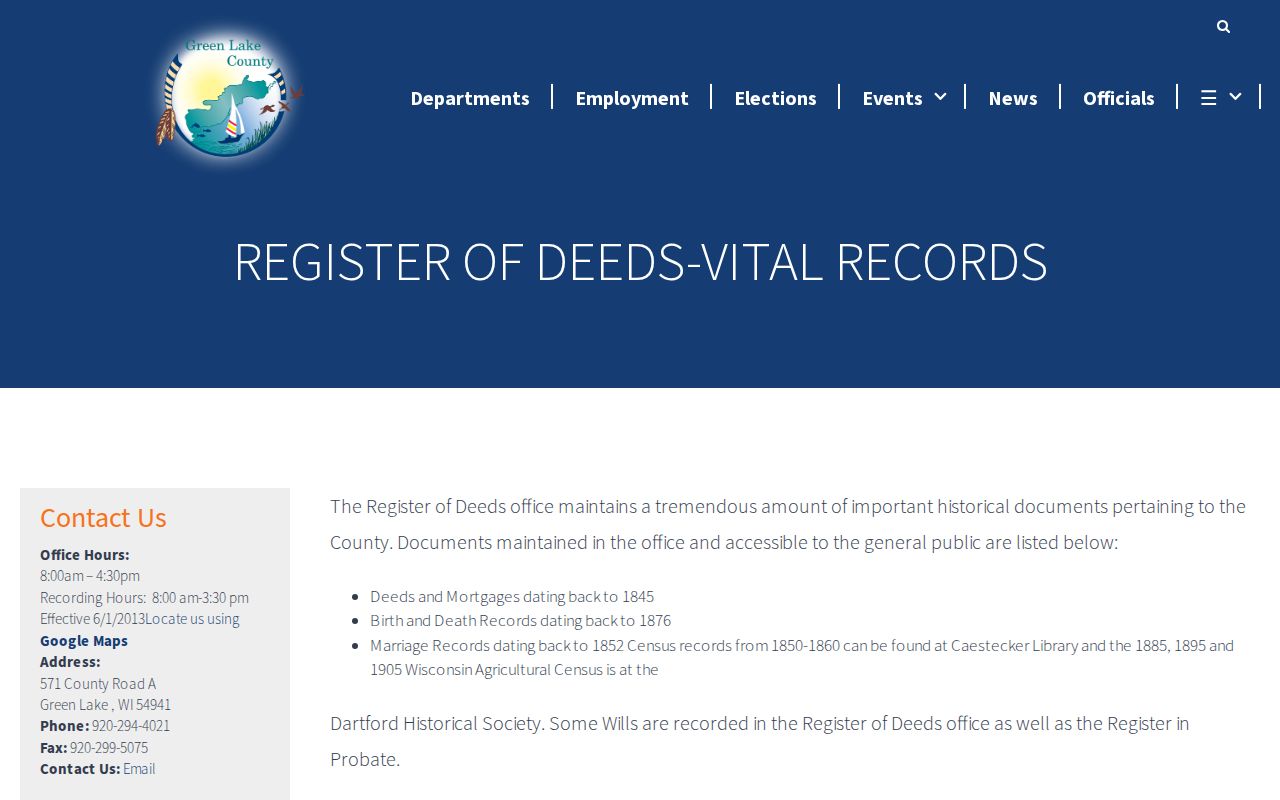
Use historical categories for context. Confirm any transfer in the deed record or the court order itself.
Same Names Need a Land Match
A chain can latch onto the wrong person when two parties share a name. Compare the parcel number, municipality, middle initial, mailing address, and full legal description. Trusts, LLCs, and estates may be indexed under an entity or fiduciary spelling. That spelling differs from a later owner of record. A name match alone cannot tie a deed to one parcel.
Green Lake County's index is double-entry verified. Still, the Register warns that source-document and indexing errors can occur. A few older images are hard to read. When a chain appears to jump, ask the office to confirm the reference. You can also inspect the book image directly. A missing online link is not evidence that no earlier transfer exists.
How Far Green Lake County Records Reach
The online cutoff is not where ownership begins. Wisconsin land registration moved from the Register in Probate to permanent county Register of Deeds offices. That shift followed 1836 and 1848. Green Lake County's original government surveys reach into the 1830s. County surveyor files hold material from the late 1840s. The county records no courthouse fire and cites no single earliest deed-book year.
Online limit. The county states June 1982 as the start for online real-estate index/images, while the WRDA profile says indexing reaches December 1985. Ask the Register about books, tract indexes, and microfilm for earlier transfers.
Lawful use. Use former-owner research for property history, title work, and family records. Do not use a historical chain to track, threaten, or harass a living person.