
How to Search Markesan Property Records
Green Lake County holds Markesan's recorded land instruments and parcel-level tax data, but the municipality runs its own assessment and collection duties separate from deed recording. Begin with an address or owner name in the county's tax-data portal. Confirm the parcel number and taxing municipality there. Then move on to the deed index or the mapped parcel for deeper detail. Permit and zoning questions work differently. For those, find the local office that handles the address rather than expecting a deed or tax search to reveal building history.
- Search the county property-tax system by street address or owner name and record the parcel identifier.
- Confirm the municipality and legal description before treating a result as the matching parcel.
- Use the Green Lake County deed index to trace recorded transfers and related instruments.
- Compare the GIS parcel and tax description with the recorded deed or plat.
- Ask the municipal or county land-use office about permits and zoning for that location.
The county property-search guide walks through the portal and follow-up checks, and the deed and map guides cover the supporting land records.
Where Markesan Records Are Kept
Green Lake County splits its Markesan records across several offices. The Register of Deeds holds recorded deeds, mortgages, plats, and certified survey maps. Other land instruments sit there too. The Real Property Lister maintains parcel identifiers, legal descriptions, mailing addresses, and district codes. That office also tracks the latest recorded owner of record, plus acreage for parcels over one acre. Assessment runs through the municipal assessor for the property's jurisdiction. The local treasurer collects payments first, before anything reaches the county installment stage. City permits and land-use files form a separate record stream. Markesan publishes no municipal permit portal or dedicated permit search field.
Markesan County Record Sources
Use county systems for parcel data and recorded instruments; use the bill and municipal assessor details for the current tax year.
Markesan Permits and Zoning
The research did not identify a city portal, phone, address-search fields, or fee schedule.
Markesan Neighborhoods and Plats
No recorded subdivision names or plat-book page numbers appear in the Markesan material. No parcel prefixes or construction eras appear either. That makes the legal description your anchor. Search the recorded plat itself rather than guessing a subdivision from a street name. Downtown grid parcels and later residential plats can each carry different description forms. So can properties near the city's edge. Treat the tax roll's abbreviated text as a clue only.
| Search setting | Useful identifiers | Confirm with |
|---|---|---|
| Downtown grid | Street, block, lot | Deed and recorded plat |
| Residential plat | Plat name and lot | GIS and Register of Deeds copy |
| Edge or acreage parcel | Municipality and survey description | Parcel map and CSM or deed |
Green Lake County charges $50 for copies of subdivision, cemetery, and condominium plats. That fee buys the recorded image. It becomes worth paying when a tax description is too short to tell lots apart. See the Green Lake County parcel map guide for the difference between a mapped polygon and the controlling recorded description. See the Register of Deeds' plat-fee and legal-description instructions before requesting a Markesan plat.
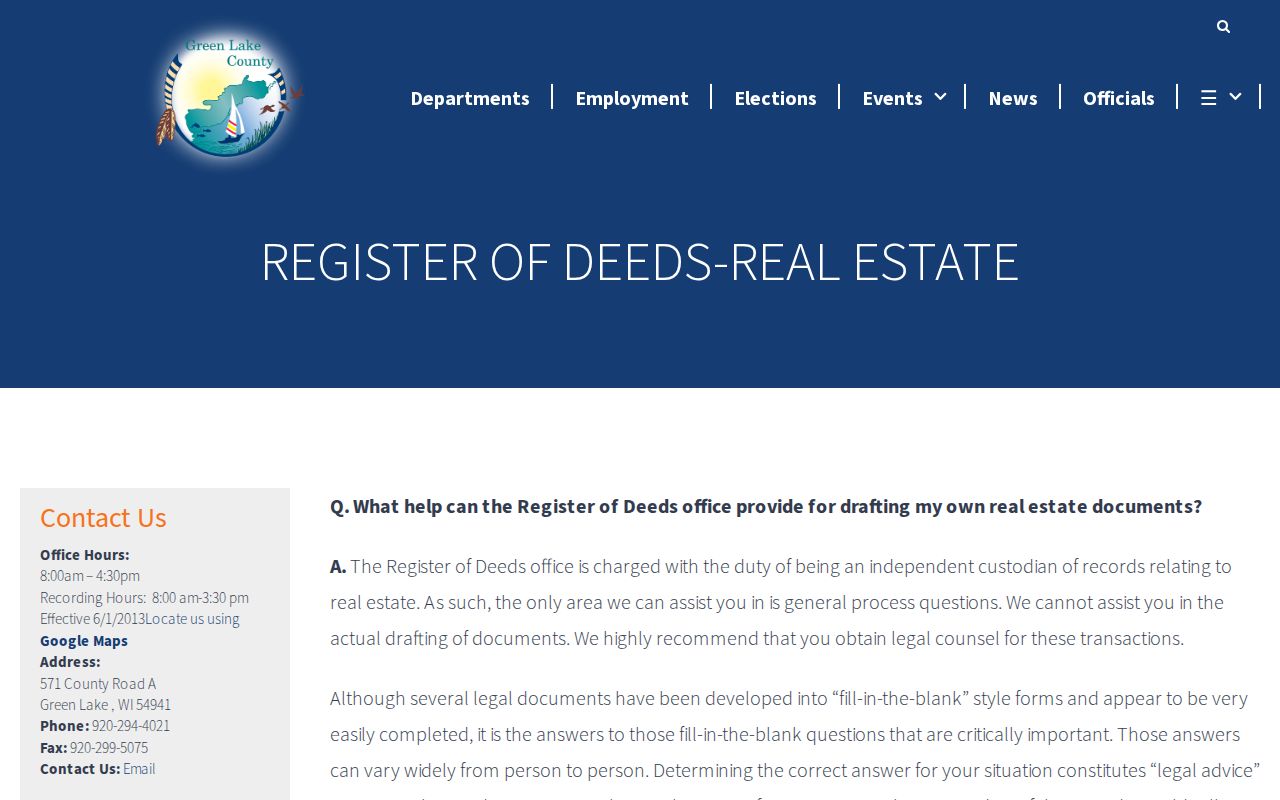
The recorded map clarifies the lot reference. The parcel polygon, in contrast, serves as a locator and never as a survey boundary.
Markesan Census Geography
The 2020 Census counted 1,377 residents in Markesan. The 2023 estimate came in at 1,352. Those citywide figures can orient a planning or demographic question. They say nothing about assessed parcels, household counts, or real estate values. The Census county-subdivision reference ties the compact Markesan city geography to Green Lake County. It helps when place names and datasets disagree. For any individual property, the parcel and tax records still govern. Review the Wisconsin Census county-subdivision table when a public dataset labels an area "Markesan."
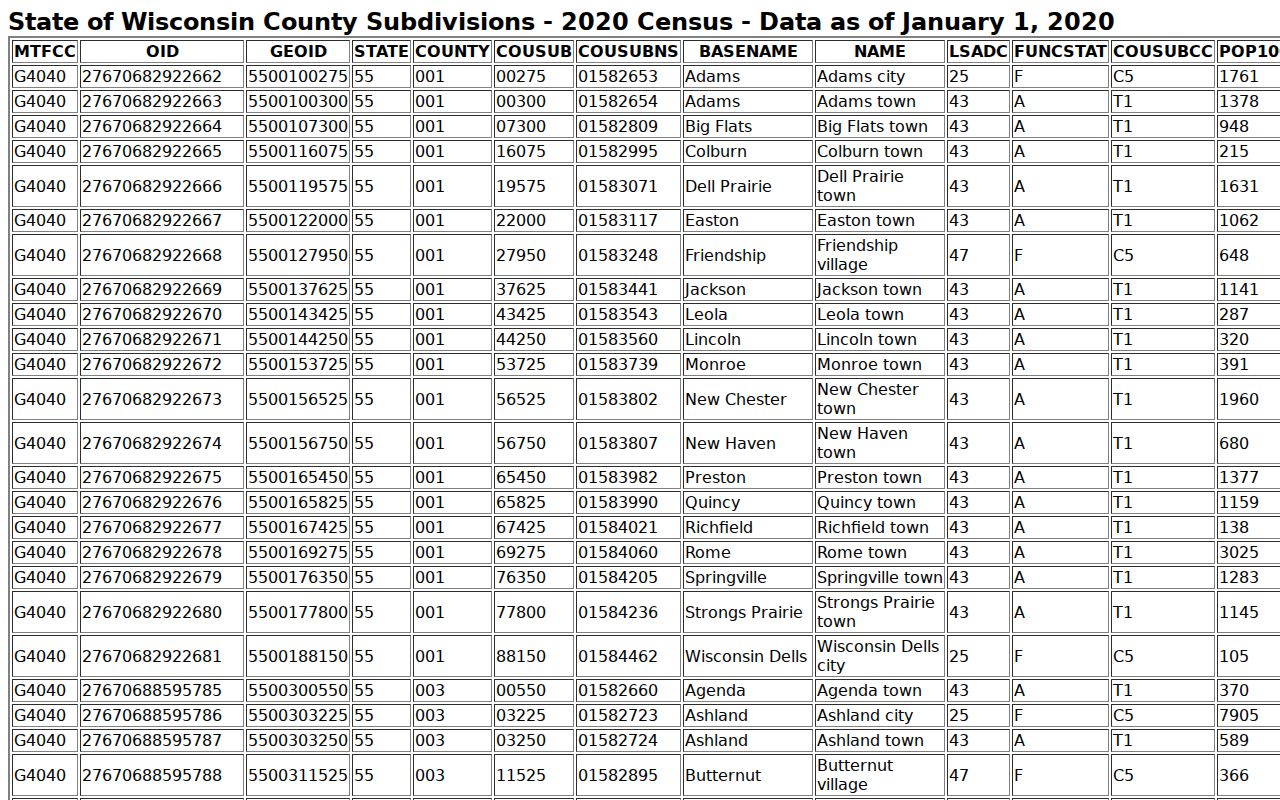
Census boundaries and counts are context. They are not a legal description, tax bill, or proof of ownership. For any land question, keep the parcel number and legal description tied to the source county.
Markesan Assessor and Roll
Markesan is a municipal assessment jurisdiction. The current assessor vendor, revaluation year, and city value trend are not published. So do not borrow a vendor or cycle from another Green Lake County municipality. Read the notice for the parcel itself. Confirm the assessor through the current local contact. The Wisconsin Department of Revenue municipal assessor calendar also lists the appointed assessor.
The Real Property Lister and the assessor answer different questions. The Lister's record carries the parcel number, owner name drawn from the latest recorded deed, legal description, mailing address, acreage above one acre, and school or special-district codes. The assessor keeps the valuation record behind the roll. Owner data that lags a new deed may simply reflect processing timing. A gap between sale price and assessed value often traces to the assessment method. The roll date matters too.
Markesan Tax Bills and Dates
Markesan property tax collection follows a calendar that can shift from municipal to county custody. Full payment generally goes to the local municipal treasurer in December or January. Pay the first installment by January 31. The second is due July 31 to the County Treasurer. Delinquent taxes from 2024 and earlier sit with the county. Always check the bill itself for the municipality and payee before choosing a payment route.
Late payments draw monthly interest and penalty of 1.5 percent, applied retroactively from February 1. Online service fees run 2.39 percent for credit cards. Debit cards cost $3.95. An e-check costs $1.50. Fees and instructions change, so review the live payment page before submitting. Note: a tax entry shows bill status at one point in time, not a full account of a deed transfer or title condition.
Markesan Zoning and Land Use
Permits and zoning approvals often live outside the deed and tax systems. Shoreland and floodplain reviews do too. Land divisions and sewage files sit in the same category. Green Lake County's Planning and Zoning department handles county land-use information and posts links. Markesan offers no confirmed city permit portal. It has no search tool, fee schedule, or direct phone line either. Confirm one thing before requesting a file. Does the address sit inside the city or in a surrounding town?
Open the county planning and zoning page for the county's available permit and municipal links.
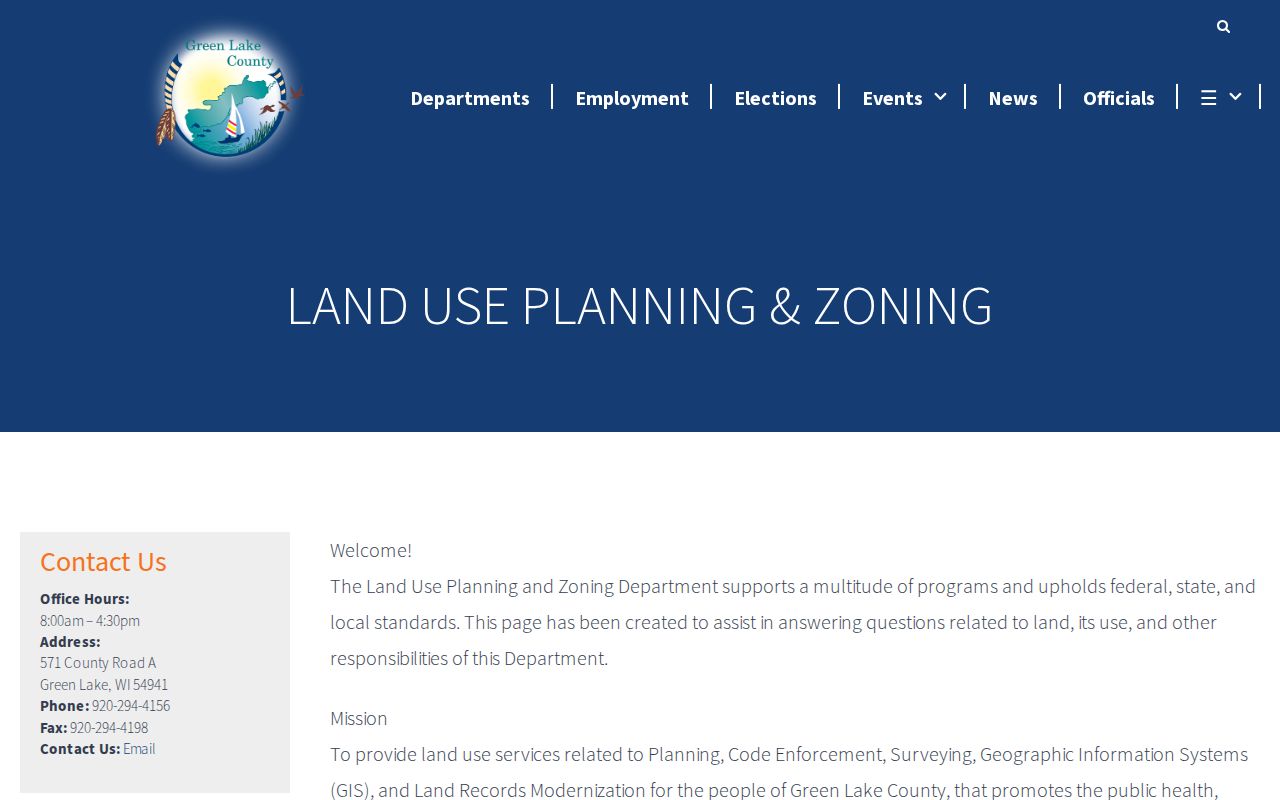
Treat that page as a directory. It does not confirm that the county holds any specific Markesan permit. Ask which office issued or reviewed the work, and bring the parcel number plus an approximate project date.
City and Town Boundaries Matter
A Markesan mailing address does not guarantee the property lies inside the incorporated city. The surrounding town keeps its own local records. It also carries its own taxing jurisdiction. That split touches assessor contacts, tax districts, zoning authority, and where permit history is filed. Check the parcel's municipality field and mapped boundary. Don't assume the postal place governs every record.
County zoning history lists six towns under general county zoning. These are Berlin, Brooklyn, Green Lake, Mackford, Manchester, and Marquette. Four others, Kingston, Princeton, Saint Marie, and Seneca, never adopted the general ordinance. Shoreland and floodplain rules can still apply in those towns. The county publishes no Markesan-specific rule or permit split for each parcel. Confirm the controlling municipal and county rules before you act.
Trace Markesan Deeds Backward
Green Lake County's online deed index and images start in June 1982, with the county profile reporting index dates through December 1985. Tapestry suits occasional use; Laredo works on subscription. ColorTrac supports grantor-grantee and tract searching. Federal tax liens and releases are indexed from April 2003. Keep in mind these dates describe online access, not the age of the county's land records.
Chasing a chain that predates the online period? Pull the legal description from a current deed, then ask the Register of Deeds about older books or film. Images recorded before the 1997 legibility requirement can be hard to read. The Register's office sits at 571 County Road A, Green Lake, WI 54941; call 920-294-4021 or email rod@greenlakecountywi.gov. Counter hours run 8 a.m. to 4:30 p.m., with recording ending at 3:30 p.m.
Review a Markesan Assessment
Wisconsin's Department of Revenue posts an Open Book and Board of Review calendar. It covers assessment-review periods statewide. It lists no Markesan-specific deadline. Follow the date on the assessment notice. Ask the right assessor how to inspect the roll, request a correction, or file an objection. Anyone weighing a challenge should compare the parcel description, classification, land and improvement details, and recent relevant sales for the correct assessment year.
State objection materials name forms PA-115A and PA-813 for the process. Follow the instructions on the current Department of Revenue form. Confirm filing requirements with the municipality. A screenshot of a calendar or an online value card preserves nothing. Keep the notice, the submitted form, supporting records, and proof of delivery together.
What Markesan Records Can Show
County deed and mortgage records document recorded transfers and encumbrances. Parcel and tax records carry the owner information used for administration, plus assessment-year values, amounts due, and district details. Maps provide a reference location. Municipal files can add permit and zoning history. No single record proves clear title, current occupancy, exact boundaries, or market value. Check the issuing office and effective date before relying on any result.
Lawful use. Markesan property information is for property research and public accountability. Do not use owner details to stalk, threaten, or harass anyone; confirm consequential ownership, title, or boundary questions with the proper custodian or professional.